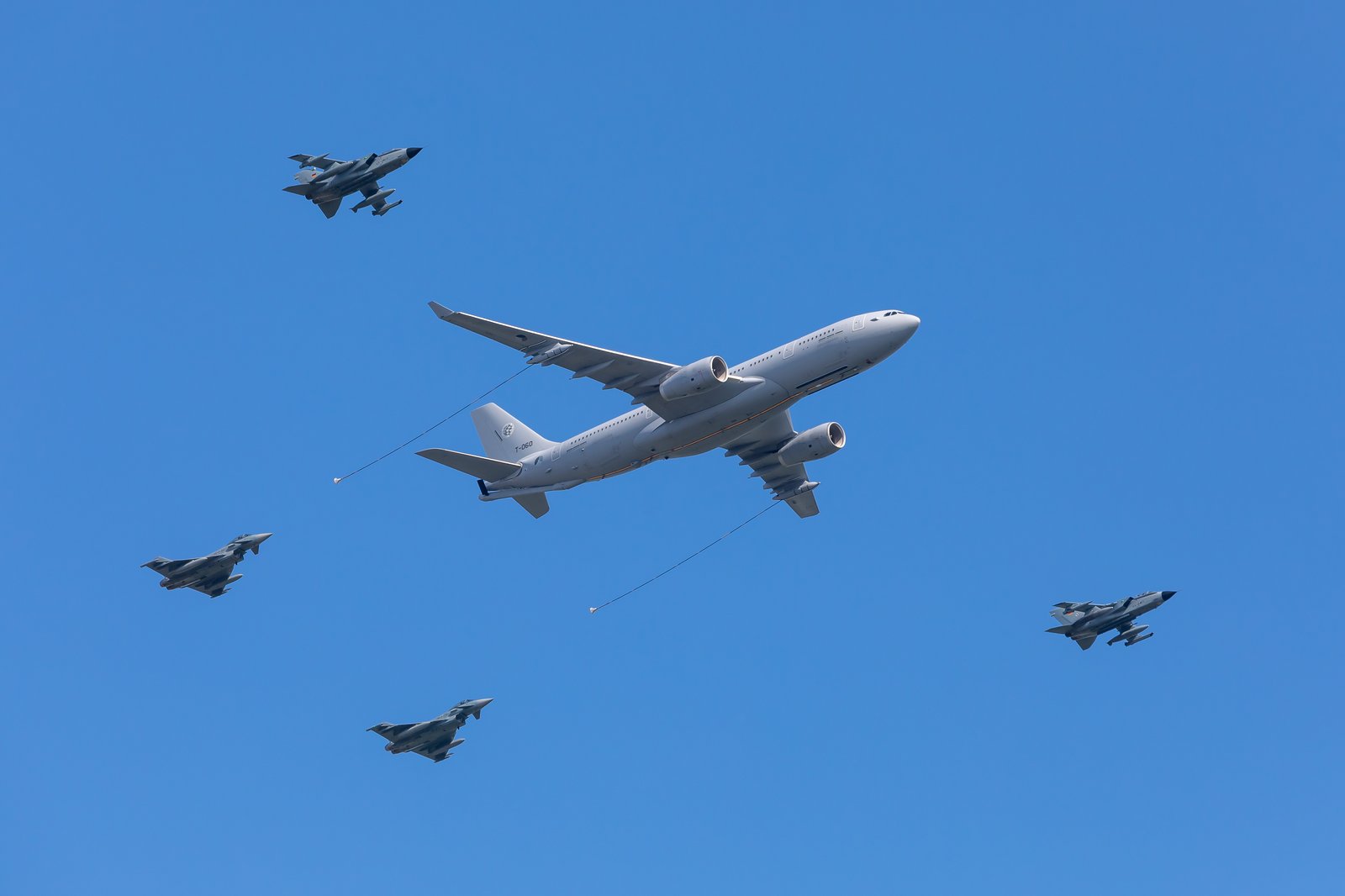
Monitoring air-to-air refueling (AAR) missions through ADSBItalia's network of 1090 MHz receivers offers aviation telemetry enthusiasts a unique window into tactical and strategic NATO operations. When strategic assets like the Airbus A330 MRTT and Boeing KC-135 Stratotanker enter high-altitude holding patterns, their radar signature and Mode-S telemetry reveal the pinpoint precision required to transfer dozens of tons of fuel at Mach 0.78.
⚡ Technical Specs & Operational Data
Tactical Rendezvous Dynamics and FL260 Orbits
Aerial refueling missions are never improvised. They are planned along specific routes known as AR (Air Refueling Tracks) or within holding areas designated as AR Anchors. On our Live Radar Map map.adsbitalia.it, observant spotters can identify a typical tanker executing a racetrack pattern usually between flight levels FL220 and FL280.
During this phase, the KC-135 or A330 MRTT maintains a constant speed around 280-300 knots CAS (Calibrated Airspeed), allowing receiving fighters (such as F-35As, Eurofighter Typhoons, or F-16s) to safely rendezvous. Mode-S telemetry transmitted by the tankers' transponders highlights barometric stability and autopilot precision in maintaining assigned military flight levels.
Refueling Systems Compared: Rigid Boom vs. Probe-and-Drogue
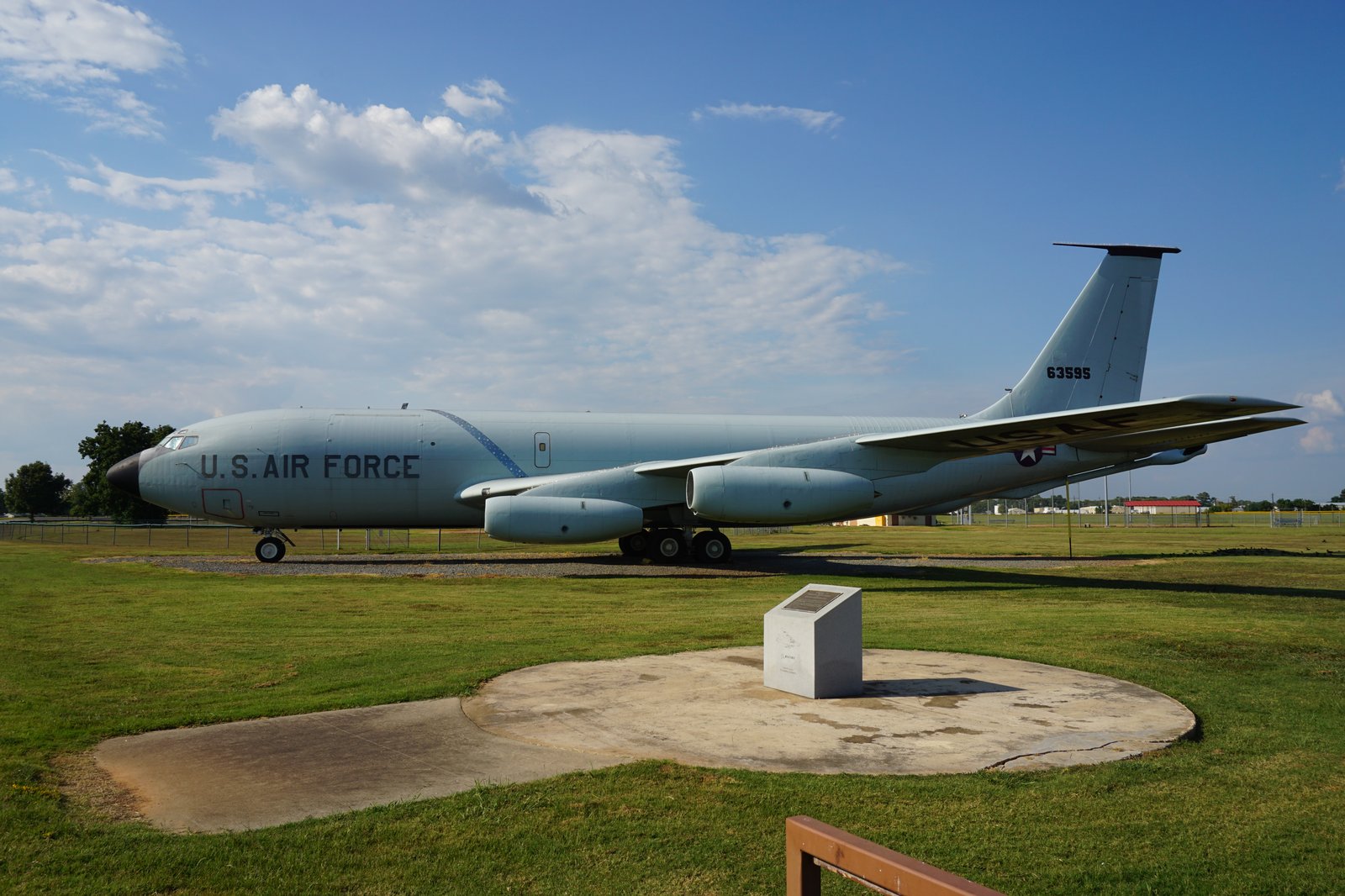
From an engineering and telemetry standpoint, the architecture of the two main tanker aircraft defines distinct operational signatures. The Airbus A330 MRTT (Multi Role Tanker Transport), powered by two Rolls-Royce Trent 700 turbofans, utilizes an advanced system combining an Aerial Refueling Boom System (ARBS) under the fuselage with underwing pods for the hose-and-drogue system.
The Boeing KC-135R/T, powered by CFM56 engines, relies primarily on the famous telescoping flying boom operated by a Boom Operator located in the rear fuselage. When ADS-B data shows abrupt vertical speed variations or attitude corrections by tight-formation fighters, monitoring associated VHF/UHF radio channels completes the tactical picture.
| Parameter / Characteristic | Airbus A330 MRTT | Boeing KC-135 Stratotanker |
|---|---|---|
| Max Fuel Capacity | 111,000 kg | 90,700 kg |
| Engines & Thrust | 2x Rolls-Royce Trent 700 (72,000 lbf) | 4x CFM International CFM56 (22,000 lbf ea.) |
| Delivery Systems | Boom + Cobham 905 E/U Pods + UARRSI | Aft Flying Boom + Optional MARS Adapter |
| AAR Operating Speed | Mach 0.75 - 0.85 | Mach 0.77 - 0.82 |
Mode-S Data Tracking and Filtering False Positives
For ground station operators tracking military targets, identifying a tanker requires correct decoding of Extended Squitter messages (DF17/DF18). Tanker aircraft often operate with encrypted IFF (Identification Friend or Foe) codes or alternate civil transponders with military Mode 5. Nevertheless, the 24-bit ICAO ID and ground speed fields allow precise tracking of entry into the refueling zone.
Time: 2026-03-30 14:22:10 UTC
ICAO 24-bit Hex: 48C2E1 (A330 MRTT - Italian Air Force)
Callsign: BRN51 (ItAF Tanker)
Squawk: 4210
Baro Altitude: 26,000 ft | Geometric Alt: 26,150 ft
Ground Speed: 295 kts | Track: 142.5 deg
Vertical Rate: 0 fpm | Roll: +0.2 deg
MSG Type: 4 (Surveillance, Altitude Reply)
To learn how to configure your receiving station and contribute to national radar coverage, check out our ADSBItalia Feeder Guide.