In ADS-B reception, radio signals broadcast by aircraft at 35,000 feet travel hundreds of kilometers before reaching your antenna. By the time a 1090 MHz signal reaches the ground at 200 nautical miles, it is measured in mere picowatts. Here is how experienced feeder operators optimize their radio frequency (RF) chain to break past the 250 NM horizon.
1. The Cable Trap: Why Low-Loss Matters
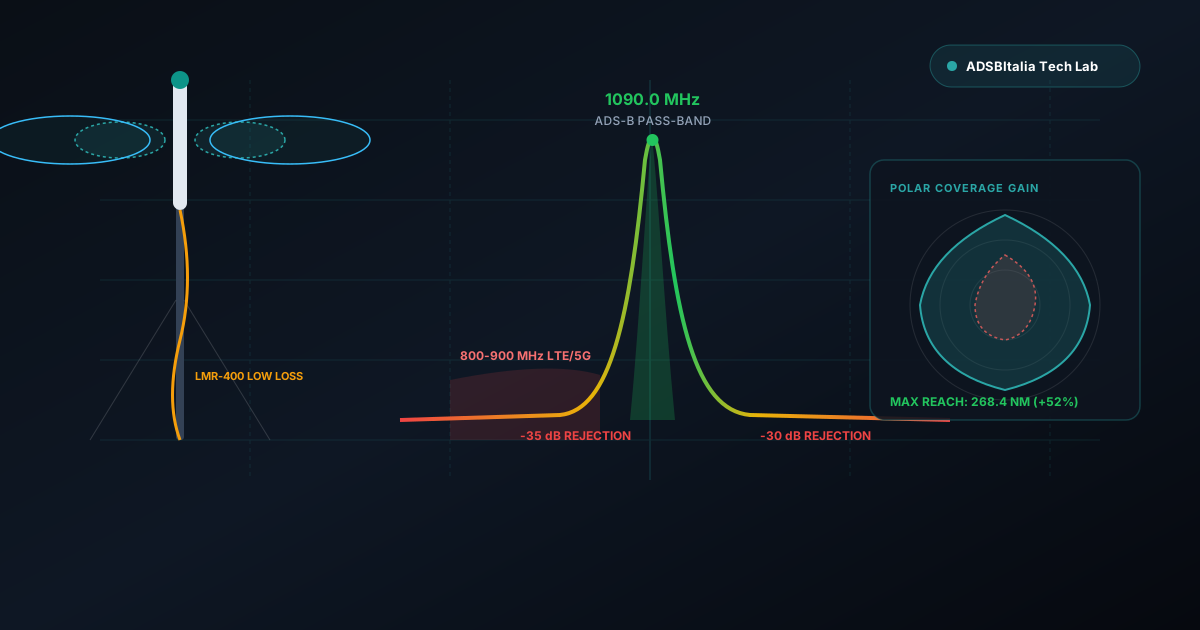
The most common bottleneck in amateur feeder installations is using standard television coax (like RG-58 or generic RG-59). At 1090 MHz, RG-58 suffers from an immense attenuation of roughly 0.55 dB per meter. Over a 10-meter run, you lose more than 5 dB—effectively erasing over 70% of received signal power before it reaches the SDR!
The Fix: Upgrade to genuine 50-ohm double-shielded low-loss cable such as LMR-400, LMR-240, or AirCell 7. For runs under 5 meters, LMR-240 provides an exceptional balance of flexibility and minimal loss.
2. SAW Bandpass Filtering: Silencing the RF Noise
In modern urban and suburban environments, the radio spectrum is crowded with nearby 4G/5G mobile base stations (800–900 MHz and 1800+ MHz) and broadcast FM transmitters. Without filtering, these powerful transmissions saturate the sensitive low-noise amplifier (LNA) inside your SDR receiver, creating front-end overload and desensitizing your receiver to faint 1090 MHz aircraft frames.
Adding a dedicated 1090 MHz SAW bandpass filter creates a steep 20–30 dB notch outside the target frequency, instantly lowering the noise floor and revealing weak signals from aircraft beyond the visible horizon.
3. Fine-Tuning the Gain in readsb / dump1090
A frequent misconception among new feeder operators is that setting the gain to -10 (maximum AGC) yields the best range. In reality, excessive gain raises internal amplifier noise and distorts high-signal messages from aircraft flying directly overhead (swamping the receiver).
The optimal target for an ADS-B station is a Signal-to-Noise Ratio (SNR) balance where the percentage of messages stronger than -3 dBFS sits comfortably between 2% and 5%. Run periodic sweeps using readsb-gain or inspect your station graph on the ADSBItalia Feeder Dashboard to find your receiver's sweet spot!